
Tahoe Mobility Hub Moves Forward at Spooner Summit
August 28, 2025 | Member Submitted
Project will improve safety and recreation access in one of Lake Tahoe’s most popular roadway corridors
August 27, 2025 (Stateline, Nev.) – The Tahoe Regional Planning Agency (TRPA) Governing Board approved a key environmental improvement project today that will continue the transformation of the Nevada State Route (SR) 28 corridor into a safe, sustainable roadway, TRPA and the Tahoe Transportation District (TTD) announced today. The Spooner Summit Mobility Hub project will also help protect Lake Tahoe from aquatic invasive species with construction of the first permanent watercraft inspection station in the Tahoe Basin.
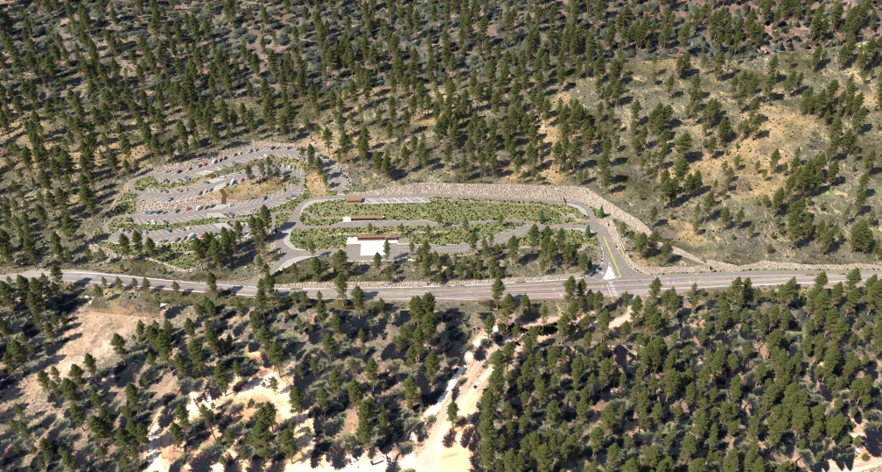
Located near the junction of U.S. Highway 50 and SR 28 at Spooner Summit, the 250-space parking area and transit hub will replace roadside parking spaces in the popular recreation corridor and connect Nevada State Parks, USDA Forest Service trailheads, and other transit stops, according to the agencies.
The Nevada Department of Transportation is leading the project with support from partner agencies under the Lake Tahoe Environmental Improvement Program (EIP). In response to safety and environmental concerns, EIP partners developed the State Route 28 Corridor Management Plan to identify transportation projects that will protect lake clarity, improve public safety, enhance recreation access, and reduce roadway congestion.
“This is a visionary project that will improve water quality, enhance public safety, reduce roadway congestion, and make access to the basin’s abundant public lands safer and more sustainable,” TRPA Executive Director Julie Regan said.
Removing parking on the road shoulders will increase safety, protect vegetation, reduce soil erosion, and improve scenic quality in the corridor, which is a designated National Scenic Byway.
“This project is more than just creating infrastructure, it’s about shaping the future of mobility in the Tahoe Basin,” said Jim Marino, Executive Director of the Tahoe Transportation District. “By creating a mobility hub at Spooner Summit, we’re setting the stage for a safer, more sustainable corridor that enhances recreation access while safeguarding the lake and surrounding environment for generations to come.”
Key project components include:
- Safe, managed parking with pay kiosk
- Permanent watercraft inspection station
- Transit hub with increased service to decrease traffic
- Reduced erosion and stormwater runoff to protect the clarity of the lake
- Technology for real-time parking availability and reservation systems
- Increased enforcement and ticketing for illegal roadside parking
- Reinvestment of parking revenues in the corridor
- Electric Vehicle charging stations and infrastructure for electric buses
At 11 miles long, the two-lane roadway from Incline Village, Nev. to Spooner Summit is the longest stretch of undeveloped shoreline in the Lake Tahoe Region and the popularity of its public beaches, trails, and scenic beauty has been growing. Surveys in 2024 showed roughly 1,000 vehicles parked on highway shoulders in the SR 28 Corridor on peak days. Illegal, off-highway parking can crowd the roadway with pedestrians and traffic and increase erosion.
Project construction is expected to begin in 2026 and the permanent watercraft inspection station, parking lot, and transit stop are scheduled to open by the fall of 2027.
The Spooner Mobility Hub parking lot will be the largest along the corridor, making it a critical location for transit services. Co-locating the aquatic invasive species inspection station on site leverages the federal, state, and private funding that supports the watercraft inspection program.
The permanent watercraft inspection station to be incorporated in the project will house aquatic invasive species inspection and decontamination equipment that has been operating in the region since TRPA and Tahoe Resource Conservation District began the program in 2008. In that time, trained staff at regional inspection locations have inspected more than 115,000 boats to protect Lake Tahoe from new aquatic invasive species. The permanent Spooner Summit inspection station will make the inspection process safer and more efficient and serve as a model for future stations.
Images
Spooner_Mobility_Hub_Simulation_Planview
Caption: An East Shore Express bus parallels the East Shore Trail carrying passengers to recreation areas along the scenic Nev. SR 28 corridor.
Credit: Drone Promotions
East-Shore-Express-aerial-trail-walkers-lake
Caption: A simulation of the Spooner Mobility Hub and watercraft inspection station with the entrance to Spooner Lake Nevada State Park below. The project is scheduled to break ground next year and will replace hundreds to unsafe, off-road parking spaces on Nev. SR 28.
Credit: Drone Promotions
Spooner_Summit_Boat_Inspections
Caption: Lake Tahoe watercraft inspectors decontaminate boats heading for Lake Tahoe at the seasonal inspection location at Spooner Summit. The mobility hub project will incorporate the first permanent boat inspection station in the Tahoe Basin.
Credit: Tahoe Regional Planning Agency
Media Contacts:
Jeff Cowen
Public Information Officer
Tahoe Regional Planning Agency
jcowen@trpa.gov
(775) 589-5278
Tiara Wasner
Public Information Officer
Tahoe Transportation District
twasner@tahoetransportation.org
(775) 589-5504
###
About Tahoe Regional Planning Agency
The Tahoe Regional Planning Agency leads the cooperative effort to preserve, restore, and enhance the unique natural and human environment of the Lake Tahoe Region, while improving local communities, and people’s interactions with our irreplaceable environment.
About Tahoe Transportation District
The Tahoe Transportation District (TTD) is a bi-state agency responsible for the management and implementation of safe, environmentally sound, multi-modal transportation projects and programs in the Lake Tahoe Region, including transit operations. TTD leads multi-jurisdictional infrastructure projects to make travel safer, improve access to recreation, and reduce traffic congestion and private car use. TTD focuses on transit’s pivotal role in improving air and water quality because more than 70 percent of the pollutants impacting Lake Tahoe’s clarity come from transportation system and built environment run-off. TTD has delivered numerous projects to help reduce environmental impacts and address the high demand residents and visitors place on the region’s transportation infrastructure, including transit solutions, roadway and safety enhancements, water quality improvements, and pedestrian/cyclist paths. For more information, please visit TahoeTransportation.org.